Strength Training for Recomposition: The Program That Builds While You Lose
Recomposition’s entire premise — building muscle while losing fat — lives or dies on the training: the stimulus must be loud enough to build through a modest deficit, which changes how you program. The recomp training guide: the requirements, the program and the cardio placement.

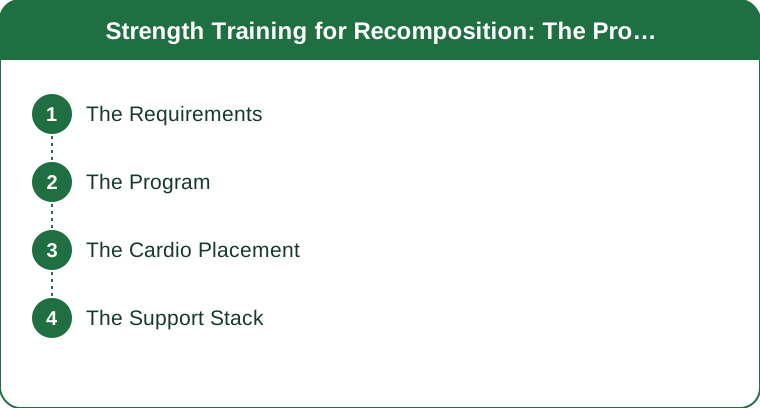
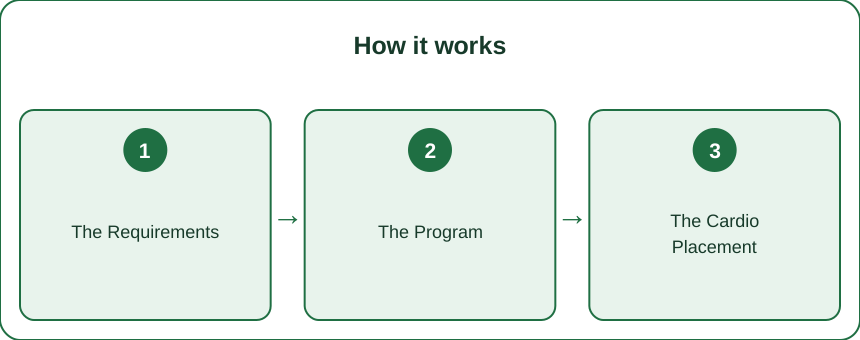
The Requirements
What recomp training demands: the stimulus priority (the muscle built only when training DEMANDS it — the progressive overload from the lift doctrine being non-negotiable in a deficit; the maintenance-effort training producing maintenance results), the volume floor (the 10-plus weekly sets per muscle group — the growth-volume research; the deficit raising the floor’s importance), the intensity honesty (the sets near genuine effort — the two-reps-in-reserve standard; the deficit tempting softer sets exactly when they can’t afford to soften), the recovery mathematics (the deficit taxing recovery — the sleep-and-protein pillars from the recovery doctrine carrying MORE weight; the volume ceiling being lower than bulk-phase training per the stress-budget doctrine), and the patience contract (the recomp timeline running months — the both-directions progress being slower than either alone per the recomp doctrine; the measurements-and-photos dashboard from the progress doctrine).
The Program
The recomp week: the frequency structure (the three-four weekly sessions — the full-body or upper-lower splits that hit muscles twice weekly per the split doctrine), the compound core (the squat-hinge-push-pull-carry canon at progressive loads — the big patterns earning their deficit calories per the compound doctrine; the heavy work FIRST while fresh), the hypertrophy accessories (the 8-15 rep isolation work completing the coverage — the lagging-muscle attention from the isolation doctrine), the progression scheme (the double-progression method — the reps grown within a range, then the load; the log from the tracking doctrine being the program’s engine), the deload rhythm (the every-fifth-week easy block — the deficit-plus-training fatigue managed per the deload doctrine), the session template (the 45-60 minute shape — one main lift, one secondary compound, two-three accessories; the efficient density from the minimal doctrine), and the exercise stability (the same core lifts held for months — the progress measurable only on consistent movements per the plateau doctrine).

The Cardio Placement
The supporting role: the recomp-cardio hierarchy (the walking base FIRST — the NEAT from the metabolism doctrine creating deficit without recovery cost; the 8k-step floor as the fat-loss engine), the formal-cardio dose (the two-three moderate sessions maximum — the zone-2 from the base doctrine; the cardio that supports without stealing recovery from lifting), the HIIT caution (the high-intensity intervals being recovery-expensive — the one-weekly ceiling during recomp per the intensity-budget doctrine; the lifting being the priority stressor), the timing craft (the cardio AFTER lifting or on separate days — the fresh-legs-for-the-bar rule; the interference-effect honesty: modest at these doses), the step-count consistency (the daily target over the weekend-warrior spikes — the NEAT stability that makes the deficit predictable per the consistency doctrine), and the enjoyment clause (the cardio you like surviving the plan — the adherence law applied per the fun doctrine).
The Support Stack
Making the training work: the protein anchor (the 1.6-2.2g per kilo from the protein doctrine — the per-meal distribution; the deficit making protein MORE critical), the deficit calibration (the modest 200-400 calorie gap from the recomp doctrine — the aggressive cut that eats muscle defeating the premise; the maintenance-calories knowledge from the maintenance doctrine as the starting point), the sleep non-negotiable (the seven-plus hours as the recomp’s silent partner — the muscle built overnight per the sleep doctrine), the progress dashboard (the strength log, the measurements, the monthly photos — the scale demoted per the progress-photo doctrine; the clothes-and-mirror data), the plateau protocol (the stalled recomp audited — the training-progression check first, the deficit-drift check second per the plateau doctrine), and the closing frame (the recomp being a training program WITH a nutrition setting — not a diet with exercise; the barbell leading, the plate supporting, the months compounding; the body, rebuilt while lightened). Lift heavy and progressively, walk daily, protein at every meal: the recomposition, trained into existence.
Recomp lives on training stimulus: 10+ weekly sets per muscle at honest effort with progressive overload, muscles hit twice weekly. Walking creates the deficit cheaply, formal cardio stays moderate and after lifting, and the modest 200-400 calorie gap plus 1.6-2.2g/kg protein protects what you’re building.
Keep Reading
This article is for general informational and styling purposes only. Fit, sizing, and product availability may vary.