Why the Scale Can Stay Completely Flat Even While Body Recomposition Is Genuinely Working
A flat scale reading week after week feels like proof that nothing is working, but during genuine body recomposition, that exact flat line can be happening precisely because real progress is occurring, not despite it.

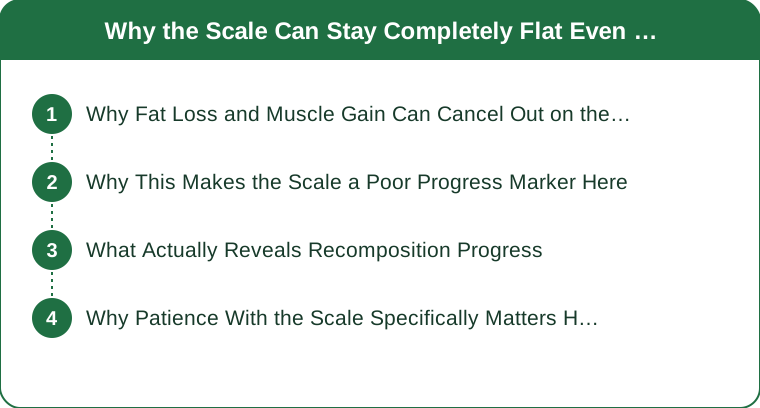
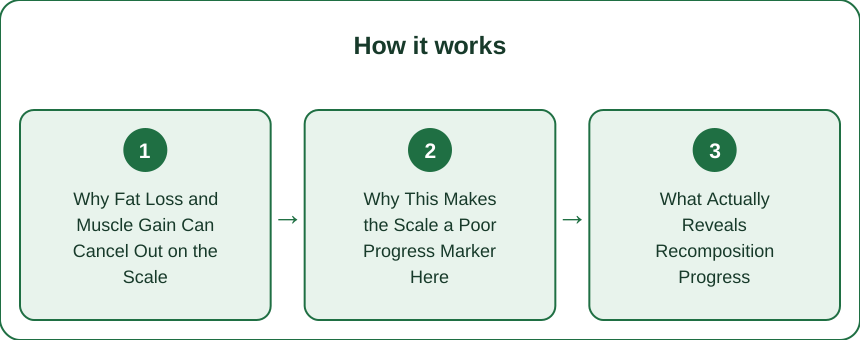
Why Fat Loss and Muscle Gain Can Cancel Out on the Scale
The core mechanism: body recomposition specifically involving simultaneous fat loss and muscle gain, two changes that move body weight in opposite directions and can numerically offset each other almost exactly over the same weeks.
Why This Makes the Scale a Poor Progress Marker Here
The measurement limitation: total body weight reflecting only the net sum of fat and muscle changes combined, which means it can stay essentially flat for weeks even while meaningful favorable changes are happening in body composition underneath.

What Actually Reveals Recomposition Progress
The better markers: how clothes fit, progress photos taken under consistent lighting and pose, and waist or hip circumference measurements all tending to shift noticeably during a stalled-scale period specifically because they track fat and muscle change independently rather than netting them together.
Why Patience With the Scale Specifically Matters Here
The practical implication: a recomposition phase reasonably lasting eight to twelve weeks of a flat scale while other markers improve, and switching to circumference and photo tracking as the primary progress check rather than abandoning a working approach because the scale alone looks stalled, and the frame (the scale can stay flat during a working recomp phase because fat loss and muscle gain move body weight in opposite directions and cancel out — measurements and photos track the actual composition change the scale is blind to.)
A flat scale reading week after week feels like proof that nothing is working, but body recomposition specifically involves simultaneous fat loss and muscle gain, two changes that move body weight in opposite directions and can numerically offset each other almost exactly over the same weeks. Total body weight reflects only the net sum of those two changes combined, which means it can stay essentially flat for weeks even while meaningful favorable changes are happening in body composition underneath, and how clothes fit, progress photos taken under consistent lighting and pose, and waist or hip circumference measurements all tend to shift noticeably during that stalled-scale period specifically because they track fat and muscle change independently rather than netting them together. A recomposition phase reasonably runs eight to twelve weeks of a flat scale while other markers improve, which makes switching to circumference and photo tracking as the primary progress check a better approach than abandoning a working plan because the scale alone looks stalled.
Keep Reading
This article is for general informational and styling purposes only. Fit, sizing, and product availability may vary.