How Long Does Body Recomposition Actually Take? A Realistic Timeline
Quick Answer: Visible recomposition results typically take 3-4 months for beginners and 6-12 months for intermediate lifters, because you’re asking your body to do two opposing things — build tissue and burn fuel — at the same time, which is inherently slower than either goal alone.
Every recomp before-and-after you’ve seen online skips the timeline. The truth is recomposition is one of the slower body-change goals you can chase, and that’s not a failure of your plan — it’s the tradeoff you’re making on purpose.

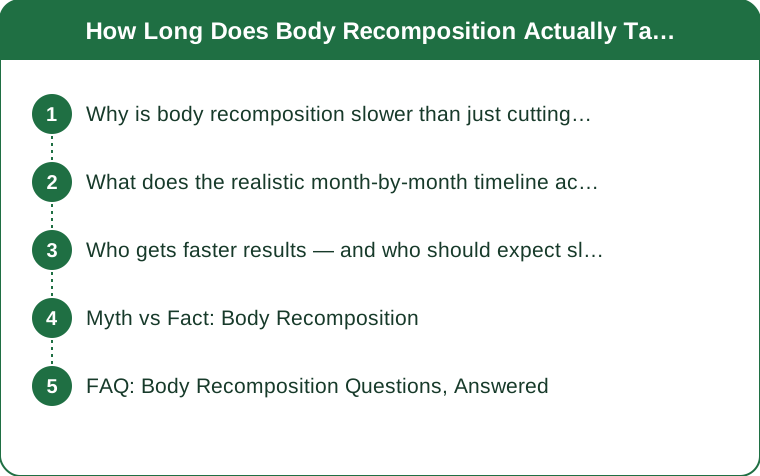
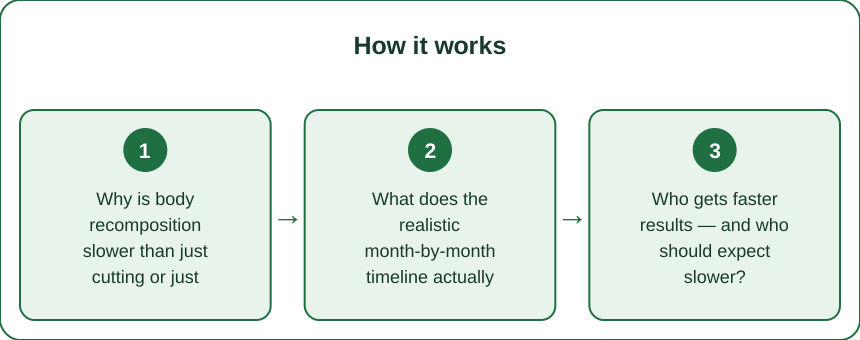
Why is body recomposition slower than just cutting or just bulking?
Because muscle gain requires a slight energy surplus signal (or at least not a large deficit) while fat loss requires an energy deficit — you’re threading a needle instead of picking a clear lane.
Your body resolves this by doing both slowly: using stored fat as partial fuel for training while directing dietary protein toward muscle repair. It works, but at maybe 30-50% the speed of a dedicated cut or dedicated bulk.
What does the realistic month-by-month timeline actually look like?
Weeks 1-4: Mostly water weight and neurological strength gains — the scale may barely move, but lifts go up fast. This is not muscle yet.
Months 2-3: The first visible signs — clothes fitting differently, some muscle definition in well-trained areas, especially for beginners with more “newbie gains” headroom.
Months 4-6: Real, visible recomposition for beginners; intermediate lifters start seeing their first meaningful shift here.
Months 6-12: This is where the transformation-photo body actually gets built for most people — it’s a slow compound, not a switch that flips.

Who gets faster results — and who should expect slower?
Beginners, people returning after a long break, and those with higher starting body fat tend to see the fastest visible recomp, because they have the most “free” progress available in both directions at once.
Trained intermediates near their genetic muscle ceiling and already-lean individuals see the slowest recomp — for these folks, a lot of coaches recommend picking a lane (cut or lean bulk) rather than chasing recomp indefinitely, since the dual-goal approach gets inefficient fast.
Myth vs Fact: Body Recomposition
Myth: The scale not moving means it’s not working. Fact: A stable weight while strength climbs and measurements shrink is often the definition of successful recomp — fat and muscle can offset each other on the scale for months.
Myth: You need to be in a calorie surplus to build any muscle. Fact: A slight deficit or maintenance intake, combined with sufficient protein and progressive resistance training, supports real muscle gain — especially for beginners and returning trainees.
Myth: Cardio ruins recomp progress. Fact: Moderate cardio supports the fat-loss side without meaningfully blunting muscle gain, as long as protein and training volume stay adequate.
FAQ: Body Recomposition Questions, Answered
What’s the best way to track recomp progress if the scale doesn’t move?
Monthly photos, tape measurements (waist, hips, arms), and strength logs together tell the real story — no single number does. Check every 4 weeks, not daily.
How much protein do I actually need for recomposition?
Most guidance lands around 0.7-1g per pound of bodyweight daily — this supports muscle repair even in a mild deficit, which is the core mechanic that makes recomp work at all.
Is body recomposition possible for everyone?
It’s most efficient for beginners, returning trainees, and higher body-fat starting points. Very lean or advanced lifters can still recomp, just more slowly — a dedicated cut or bulk phase may reach their goal faster.
TL;DR:
- Recomp is inherently slower than cutting or bulking alone — you’re doing two opposing things at once
- Visible change: 3-4 months for beginners, 6-12 months for intermediates
- A stable scale with rising strength and shrinking measurements often means it’s working
- Track photos, tape, and strength monthly — not the scale daily
Give it the months it actually needs before judging whether recomp is working for you.
Keep Reading
This article is for general informational and styling purposes only. Fit, sizing, and product availability may vary.