When Recomposition Stalls: The Troubleshooting Guide for the Stuck Middle
Recomposition’s slow-by-design progress makes real stalls hard to spot — is it working invisibly or genuinely stuck? — and the answer is a diagnosis order, not a panic overhaul. The recomp troubleshooting guide: the checks, the levers and the phase-change question.

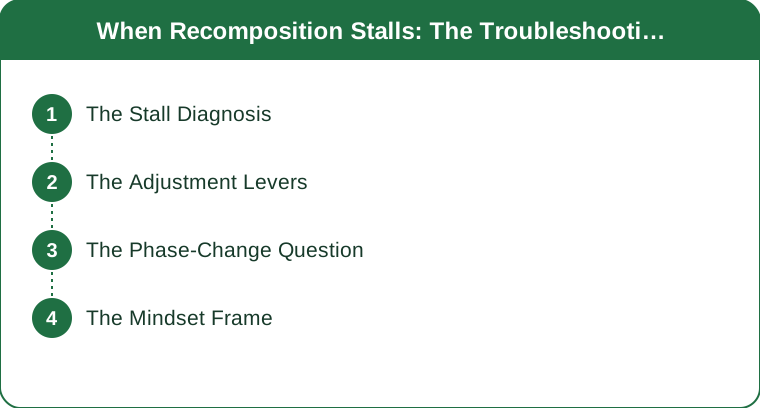
The Stall Diagnosis
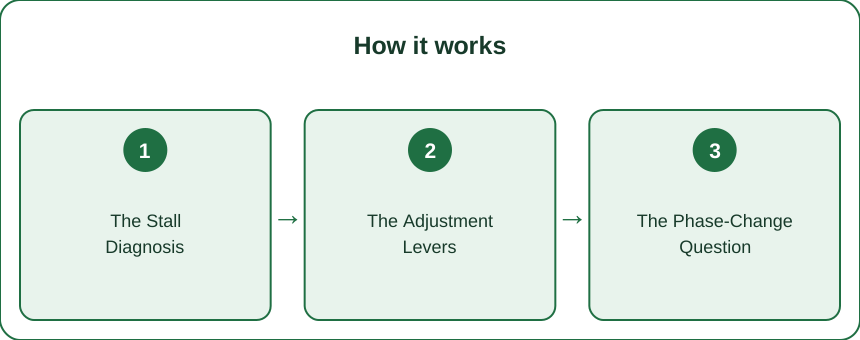
Is it actually stalled: the measurement audit first (the scale being recomp’s worst metric — the tape, photos and strength log from the progress doctrine checked before any verdict; the waist down and lifts up meaning it’s WORKING despite the scale), the timeline honesty (the recomp progress measured in 4-6 week blocks — the two-week panic being noise per the patience doctrine; the monthly photo comparison as the real referee), the true-stall definition (the 6-plus weeks of flat measurements AND flat strength — the both-flat condition; the either-one-moving meaning continue), the data-quality check (the measurements taken consistently — the same-conditions morning protocol from the tracking doctrine; the sloppy data creating phantom stalls), and the life-context scan (the brutal-month stall being the stress budget from the stress doctrine — the maintenance-through-chaos verdict per the maintenance doctrine; the stall that’s actually successful defense).
The Adjustment Levers
Ranked by likely payoff: lever one — the training-progression audit (the log reviewed for actual overload — the same-weights-for-weeks discovery being the most common answer; the double-progression restarted per the training doctrine), lever two — the calorie-drift check (the portions crept and the tracking loosened — the weekend-refund pattern from the deficit doctrine; the one-week honest re-measure), lever three — the protein verification (the intake re-counted — the assumed-100 actual-70 discovery; the per-meal anchors re-established per the protein doctrine), lever four — the NEAT restoration (the step count quietly fallen — the deficit’s silent partner audited per the metabolism doctrine), lever five — the sleep-and-stress repair (the recovery deficit blocking both goals — the sleep doctrine’s hours; the cortisol context per the stress doctrine), the one-lever law (the single change per 3-4 week block — the everything-at-once panic that can’t attribute results per the experiment doctrine), and the deload wildcard (the accumulated-fatigue stall answered by an easy week — the springy return from the deload doctrine).

The Phase-Change Question
When recomp isn’t the right tool anymore: the recomp sweet-spot review (the approach serving beginners, returners and the higher-body-fat best per the recomp doctrine — the leaner-and-trained population outgrowing it), the dedicated-cut case (the fat-loss priority with muscle established — the modest deficit deepened with the strength maintained; the cut-phase rules from the deficit doctrine; the finite timeline with a defined end), the dedicated-build case (the muscle-priority with leanness comfortable — the small surplus that speeds building per the muscle doctrine; the fear-of-surplus honesty: the muscle built faster fed), the maintenance-phase legitimacy (the intentional hold after a long push — the maintenance-calories practice from the maintenance doctrine; the psychological reset that precedes the next push), the phase-length wisdom (the 8-16 week phases with transitions — the periodized year over the permanent grind per the periodization doctrine), and the decision framework (the goal named honestly, the phase matched, the metrics chosen — the stuck-in-the-middle being often a goal-clarity problem, not a metabolism one).
The Mindset Frame
The head game of the middle: the invisible-progress reality (the recomp’s changes arriving in clothes-fit and lift numbers before mirrors — the daily-mirror blindness per the photo doctrine; the trust in the monthly evidence), the comparison hygiene (the recomp timeline versus the cut-influencer’s — the different-tools honesty; the own-lane doctrine), the process anchoring (the identity built on training-and-eating well — the outcome following the process per the identity doctrine; the streak metrics that stay controllable), the burnout watch (the year-round-optimization fatigue — the maintenance phases as planned rest per the deload doctrine; the food-and-training relationship protected per the sustainable doctrine), and the closing reassurance (the stall being a checklist, not a verdict — the levers pulled in order usually restarting progress within a month; the middle, troubleshot calmly; the recomposition, resumed or gracefully re-phased). Audit the log first, change one lever per month, re-phase when the tool no longer fits: the stall, solved in order.
Before declaring a stall, check tape-photos-and-lifts — the scale lies during recomp. True stalls (6+ weeks, everything flat) answer to levers in order: training progression, calorie drift, protein, steps, sleep — ONE per month. Lean-and-trained bodies eventually outgrow recomp; re-phase to a dedicated cut or build.
Keep Reading
This article is for general informational and styling purposes only. Fit, sizing, and product availability may vary.