How Long Does Body Recomposition Actually Take for Women? A Month-by-Month Timeline
Quick Answer: Body recomposition for women typically shows early strength gains and improved energy in month 1, visible changes in how clothes fit by months 2-3, and noticeable body composition shifts by months 4-6 - all while the scale can stay flat or barely move the entire time. It’s a slow process by design, not a slow process because something is wrong.
The scale not moving is the number one reason people quit body recomposition early, right around the point when real changes are actually happening underneath. Here’s a realistic month-by-month look at what to expect.

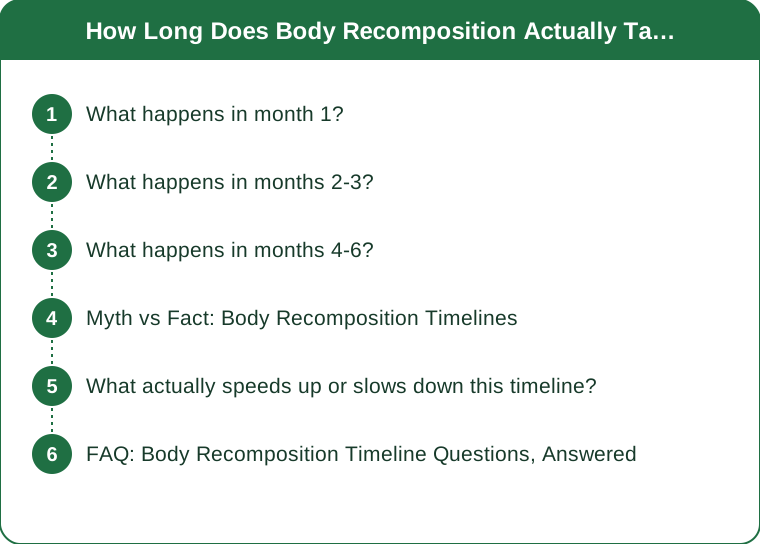
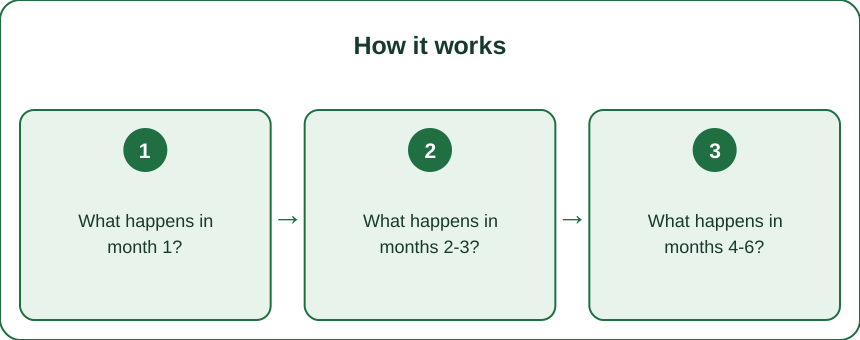
What happens in month 1?
Month 1 is mostly neurological and habit-based, not visible. Strength increases fastest here - not because muscle has grown yet, but because your nervous system is getting more efficient at recruiting the muscle you already have. Energy and sleep often improve too as your body adjusts to a new eating and training routine.
The scale can go up, down, or stay flat with no clear pattern in month 1 - water retention from new training soreness alone can mask real progress on the scale during this window.
Appetite often shifts noticeably in month 1 too, sometimes increasing as your body adjusts to a new training demand - this is a normal metabolic response, not a sign of losing control, and it typically settles into a more predictable pattern by month 2.
What happens in months 2-3?
This is typically when clothes start fitting differently before the scale reflects much change. Small shifts in muscle and body fat distribution show up in how your waistband or sleeves fit, even when total body weight hasn’t moved. Some people notice their face and midsection changing shape first.
Strength gains continue, now increasingly from actual muscle tissue adaptation rather than just nervous system efficiency. This is also a common point where motivation dips because the visual changes are still subtle relative to the effort being put in.
What happens in months 4-6?
By this window, body composition changes typically become visible enough that other people start noticing, even if the scale number is similar to where you started. Muscle definition increases, and for many women, measurements (waist, hips) shift more than weight does.
This is the range where most people who stuck with a consistent recomposition approach (adequate protein, resistance training, a modest or no calorie deficit) start feeling like the process is ‘working’ in a way they can see, not just feel.

Myth vs Fact: Body Recomposition Timelines
Myth: If the scale hasn’t moved in 6 weeks, recomposition isn’t working. Fact: A flat scale with improving strength, better-fitting clothes, or visible muscle definition is a sign it’s working exactly as intended - recomposition can happen with body weight staying nearly constant.
Myth: Recomposition happens faster for women who train harder. Fact: Consistency and adequate protein intake matter more than training intensity alone - overtraining without enough recovery can actually slow visible progress.
Myth: You need a big calorie deficit to recomp. Fact: A modest deficit or even maintenance calories, combined with resistance training and enough protein, is the more commonly recommended approach for true recomposition rather than simultaneous fat loss and muscle gain under a large deficit.
What actually speeds up or slows down this timeline?
Protein intake (commonly cited around 0.7-1 gram per pound of body weight) and consistent resistance training (2-4 sessions weekly, progressively challenging) are the two biggest levers. Sleep matters more than most people expect - poor sleep blunts both muscle recovery and appetite regulation, which can slow visible progress even with a good training plan.
Hormonal factors, including where you are in your menstrual cycle or perimenopause, can also shift how fast changes show up month to month - this is normal variation, not a sign something is wrong.
Stress management deserves more credit than it usually gets in recomposition timelines too - chronically elevated stress hormones can interfere with both fat loss and muscle-building signals, which is part of why two people doing seemingly identical training and eating plans can see meaningfully different timelines.
Training age matters as well - someone newer to resistance training overall tends to see faster initial visible changes than someone who has already been lifting consistently for years, simply because there’s more room for rapid neuromuscular adaptation early on.
FAQ: Body Recomposition Timeline Questions, Answered
Is 6 months a guarantee I’ll see visible changes?
No single timeline is guaranteed - it depends on starting point, consistency, and individual factors like hormones and sleep. 4-6 months is a reasonable general range, not a fixed promise.
Why does my friend seem to be recomping faster than me on a similar plan?
Starting body composition, training history, hormones, and sleep quality all vary between people - comparing timelines to someone else’s is rarely a useful measure of your own progress.
Should I track anything besides the scale during recomposition?
Yes - strength numbers, progress photos under consistent lighting, and how clothes fit are all more reliable recomposition indicators than body weight alone.
TL;DR:
- Month 1: strength and energy improve, the scale is unreliable
- Months 2-3: clothes fit differently before the scale reflects much
- Months 4-6: visible body composition changes typically become noticeable
- Protein intake, consistent resistance training, and sleep are the biggest levers
A flat scale during this process usually means it’s working, not stalling - track strength and fit, not just weight.
Keep Reading
This article is for general informational and styling purposes only. Fit, sizing, and product availability may vary.