Why Body Recomposition Takes Longer Than the Transformation Photos Suggest
Quick Answer: Realistic body recomposition (losing fat while building muscle simultaneously) typically takes 4-6 months to show clearly visible change for most people, since both processes happen slowly and partially offset each other on the scale — the dramatic 8-12 week transformation photos online usually involve more aggressive fat loss phases or aren’t showing true simultaneous recomposition.
You’ve been consistent for 2 months and the mirror looks almost the same. That’s not a sign it’s failing — recomposition is one of the slowest-visible forms of body change, and most of what’s shared online skips over that reality.

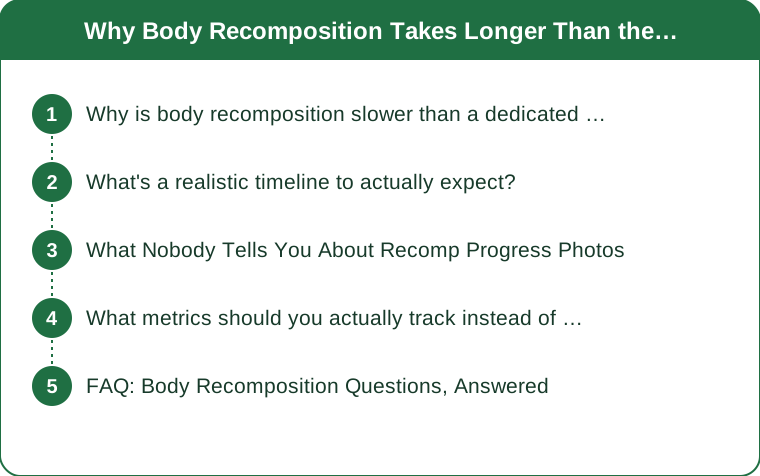
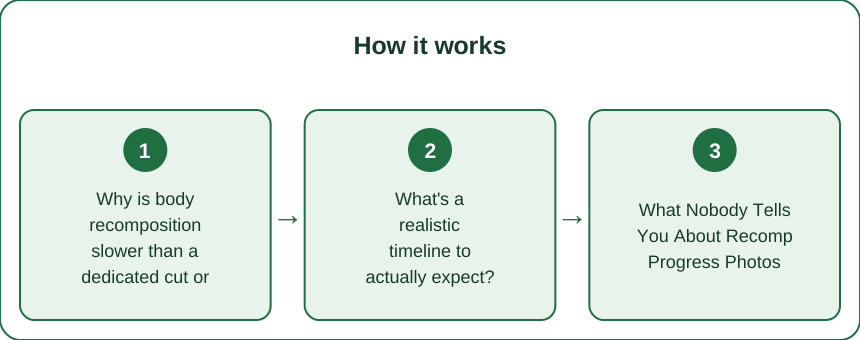
Why is body recomposition slower than a dedicated cut or bulk?
Because you’re asking your body to do two metabolically opposed things — burn fat (needs a calorie deficit) and build muscle (typically favored by a calorie surplus) — at the same time, but partially, so neither process runs at its maximum rate. This is exactly why recomp takes longer than either goal pursued separately.
Additionally, since fat loss and muscle gain often happen in roughly similar amounts during recomp, the scale can stay nearly flat for weeks while real body composition change is happening — this is the most common reason people think it’s ‘not working.‘
What’s a realistic timeline to actually expect?
Beginners to strength training (first 6-12 months of consistent training) see the fastest recomposition results, sometimes with visible change in 8-12 weeks, because ‘newbie gains’ allow simultaneous muscle building and fat loss more efficiently than for trained lifters.
Trained lifters (1+ years of consistent training) should expect 4-6+ months for clearly visible recomposition change, since their muscle-building rate slows considerably compared to beginners.

What Nobody Tells You About Recomp Progress Photos
Many viral ‘recomp transformation’ photos actually represent sequential cut-then-bulk cycles compressed into a single before/after, not true simultaneous recomposition — or they involve significant water weight and lighting/pump differences between photos that exaggerate the visual change.
Genuine simultaneous recomposition is a real, slower process — the fast, dramatic version usually being marketed is a different (and often misleadingly presented) strategy.
What metrics should you actually track instead of the scale?
Waist circumference, progress photos in consistent lighting/pose every 2-4 weeks, and strength progression (weight lifted for the same reps) are more reliable recomp indicators than body weight, which can stay flat for months while composition genuinely shifts.
A body composition scan (DEXA or similar) every 8-12 weeks, if accessible, is the most objective way to confirm recomposition is happening beneath a static scale number.
FAQ: Body Recomposition Questions, Answered
Is it possible to build muscle and lose fat at the same time as a beginner?
Yes — this is when simultaneous recomposition is most efficient, due to elevated muscle-building responsiveness in the first year of consistent training.
Should I eat at a deficit, surplus, or maintenance for recomp?
A slight deficit or maintenance calories, paired with adequate protein (1.6-2.2g/kg) and consistent strength training, is the most commonly recommended approach — a large deficit undermines the muscle-building side of the equation.
How do I know if my recomp plan is actually working if the scale isn’t moving?
Track waist measurement, photos, and strength numbers — improving strength with a stable or slightly improving waist measurement, even with flat body weight, indicates recomposition is occurring.
TL;DR:
- Recomp is slower than a dedicated cut or bulk because it runs both processes partially, at once
- Beginners can see change in 8-12 weeks; trained lifters should expect 4-6+ months
- Many viral ‘recomp’ photos are actually sequential cut/bulk cycles, not true simultaneous change
- Track waist measurement, photos, and strength — not just the scale
Give it the realistic timeline before assuming your plan isn’t working.
Keep Reading
This article is for general informational and styling purposes only. Fit, sizing, and product availability may vary.