Why Your Clothes Change Before the Scale Does During Body Recomposition
Quick Answer: During body recomposition, fat loss and muscle gain can happen at similar rates, keeping total weight roughly steady even as body shape visibly changes — clothes fitting differently while the scale stays flat is often the clearest early evidence that recomposition is actually happening.
The scale measures total mass, not what that mass is made of, which is exactly why it can stay quiet while your body is quietly changing shape underneath.

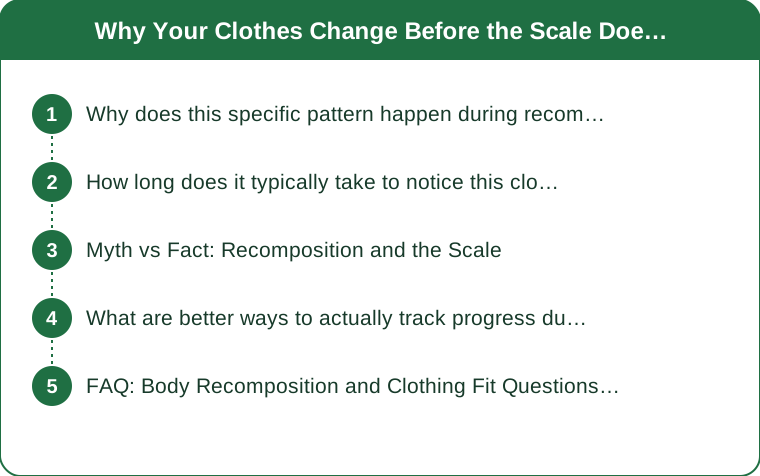
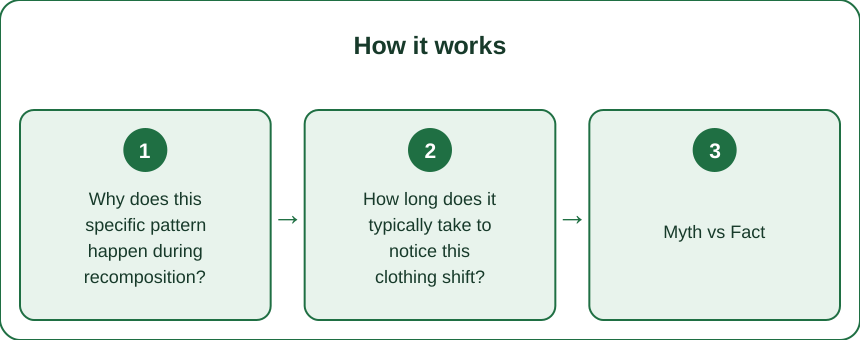
Why does this specific pattern happen during recomposition?
Muscle is denser than fat, meaning a given volume of muscle weighs more than the same volume of fat — so gaining muscle while losing fat can result in very little net change on the scale, even though the body is visibly smaller in some areas and firmer in others.
Clothes fit based on volume and shape, not weight, which is why they respond to this shift faster and more visibly than a scale number does.
How long does it typically take to notice this clothing shift?
Most people report noticing a difference in how clothes fit somewhere between 4 and 8 weeks into consistent strength training and adequate protein intake, well before major scale movement, if any happens at all.
This timeline varies a lot based on training experience — people newer to strength training often see this shift faster than experienced lifters, since beginner muscle gain tends to happen more quickly.

Myth vs Fact: Recomposition and the Scale
Myth: a flat scale means the training and nutrition plan isn’t working. Fact: a flat scale during a recomposition phase can actually indicate the plan is working exactly as intended, with fat loss and muscle gain roughly offsetting each other.
Myth: you should switch strategies if the scale doesn’t move within a couple weeks. Fact: recomposition is a slower process than pure weight loss, and clothing fit, photos, and measurements are more reliable short-term indicators than the scale during this specific phase.
What are better ways to actually track progress during this phase?
Taking consistent progress photos in the same lighting and clothing, tracking body measurements at a few key points, and simply noting how specific clothes fit are all more sensitive indicators than the scale during recomposition.
Tracking strength progress in the gym also matters — steady strength gains alongside stable weight are a strong sign muscle is being built even without dramatic scale movement.
FAQ: Body Recomposition and Clothing Fit Questions, Answered
Should I stop weighing myself during a recomposition phase?
Not necessarily, but weighing less frequently and pairing it with other tracking methods gives a more complete and less discouraging picture.
Does this mean I’ll never see the scale move during recomp?
No — most people do eventually see some scale movement, it just tends to lag behind visible and clothing changes rather than leading them.
Is body recomposition slower than a dedicated cut or bulk?
Generally yes, since it’s asking the body to do two things (build muscle, lose fat) at once rather than fully prioritizing one, which is a reasonable tradeoff for the more balanced result.
TL;DR:
- Muscle gain and fat loss can offset each other on the scale during recomposition
- Clothes respond to shape and volume changes faster than the scale does
- Most people notice a clothing fit change around 4-8 weeks into consistent training
- Progress photos, measurements, and strength gains are better trackers than the scale during this phase
If your jeans feel different and the scale doesn’t, that’s not a mystery — that’s recomposition doing exactly what it’s supposed to do.
Keep Reading
This article is for general informational and styling purposes only. Fit, sizing, and product availability may vary.