Body Recomposition Timeline: How Long It Actually Takes to Lose Fat and Build Muscle at Once
Quick Answer: Body recomposition — losing fat and building muscle simultaneously — takes months, not weeks, and is slower than either goal pursued alone. The scale often stalls even while your body genuinely changes, so track progress photos, measurements, and strength gains instead. Beginners typically see it happen faster than experienced lifters.
Body recomposition — losing fat and building muscle at the same time — is absolutely possible. But it’s slower than either goal pursued alone, and impatience is exactly what makes most people quit before it actually starts showing. (Not medical advice — check with a doctor before major changes to diet or training, especially if you have existing health conditions.)

Why Does Recomposition Take So Much Longer Than Regular Weight Loss?
Because it’s asking your body to do two things at once, and they’re pulling in somewhat opposite directions. Fat loss typically wants a calorie deficit; muscle building typically wants enough fuel to grow. Recomp threads that needle at roughly maintenance calories, which means both processes happen — just each one more slowly than if you focused on it alone.
That’s the honest tradeoff: recomp is genuinely slower than a dedicated cut or a dedicated bulk. And because it’s slower, the scale often stalls for weeks at a time even while real physical change is happening underneath. This is exactly where impatience kills the process — people see a stuck scale number, assume nothing’s working, and quit right before the visible payoff.

What Should You Actually Expect From a Recomp Timeline?
The scale stays similar while your composition genuinely changes. This is the single hardest part psychologically — you’re losing fat and gaining muscle at roughly the same rate, so total body weight barely moves even as your body looks and feels different.
Measure beyond the scale. Progress photos, tape measurements, and strength numbers tell the real story that the scale can’t. If you’re only tracking one number, you’re missing most of the actual signal.
Expect months, not weeks. Recomp is a several-month project at minimum, not a six-week challenge. Set your expectations accordingly from day one so you don’t quit at week four wondering why nothing’s “working.”
Beginners see it faster. If you’re new to structured training, you have a real advantage here — “newbie gains” mean beginners can build muscle and lose fat simultaneously more easily than experienced lifters, whose bodies have already adapted to training stimulus.
Strength gains are a genuine signal. Getting stronger on your lifts over time is real evidence that muscle is being built, even when the mirror and scale seem unchanged week to week.
Clothes fitting differently is often the first visible sign. Before the scale or even progress photos show an obvious difference, clothes fitting looser in some places and snugger in others (shoulders, thighs) is frequently the earliest tell.
Nutrition — specifically protein — drives the whole process. Consistent, adequate protein intake alongside roughly maintenance-level calories is what makes simultaneous fat loss and muscle gain possible at all.
Plateaus are completely normal. A stall doesn’t mean recomp has stopped working — it’s a standard, expected part of the process, not a sign to panic or abandon the approach.
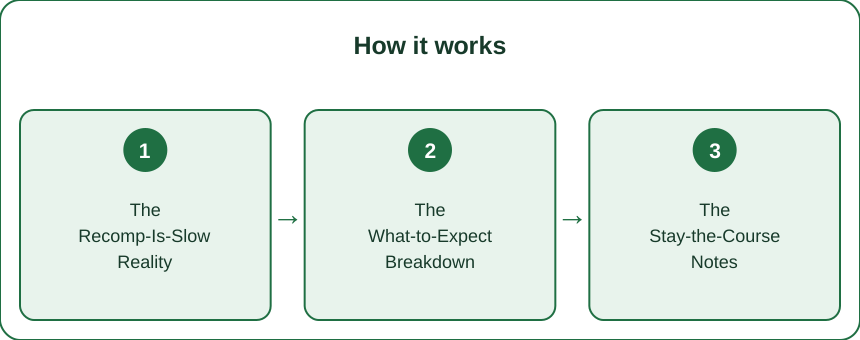
How Do You Actually Stay the Course Through a Slow Process?
- Track non-scale progress deliberately — photos, measurements, and strength numbers, tracked on a consistent schedule (monthly is usually enough)
- Be patient — this is genuinely a months-long process, and rushing it doesn’t speed it up
- Eat consistently — steady protein intake and roughly maintenance calories, not day-to-day swings
- Train progressively — your strength training needs to keep asking more of your muscles over time, not stay static
- Troubleshoot plateaus rather than panic — small adjustments to training or nutrition, not a full restart
- Trust the slow process — recomp works, but it works on its own timeline, not a six-week one
- Don’t chase the scale — it’s the least informative number you’re tracking during a recomp
Myth vs Fact: Body Recomposition
Myth: “If the scale isn’t moving, recomposition isn’t working.” Fact: The scale is often the least useful metric during recomp — simultaneous fat loss and muscle gain can leave total weight nearly unchanged for weeks while your body composition genuinely shifts.
Myth: “Recomp works the same speed for everyone.” Fact: Beginners and newer lifters typically see recomp happen faster, thanks to “newbie gains” — experienced lifters progress more slowly because their bodies have already adapted to training.
Myth: “A plateau means you should quit and try a different approach.” Fact: Plateaus are a normal, expected part of the recomp timeline, not a sign of failure — most respond to small nutrition or training adjustments, not an overhaul.
Mini FAQ
How long does body recomposition actually take?
Months, not weeks, for most people — plan for at least a few months before expecting a clearly visible transformation. Beginners tend to see results somewhat faster than experienced lifters.
Why does the scale not move during recomp even when it’s working?
Because you’re losing fat and gaining muscle at similar rates, so total body weight can stay nearly flat even as your composition genuinely changes underneath.
What should I track instead of the scale during a recomp?
Progress photos, body measurements, and strength gains on your lifts. These reflect real physical change that the scale often can’t capture. As always, check with a doctor before major changes to diet or training.
TL;DR:
- Recomp is slower than either fat loss or muscle building pursued alone
- The scale often stalls even while real body composition change is happening
- Track photos, measurements, and strength instead of just weight
- Expect a months-long timeline; beginners typically progress faster
- Plateaus are normal — stay consistent with protein and progressive training rather than quitting early
Body recomposition — losing fat and building muscle at once — is possible, but slower than either goal alone, and impatience makes people quit before it works. What to expect: the scale stays similar while your composition changes (measure with photos, measurements and strength instead), it takes months not weeks (faster for beginners), and plateaus are normal — while clothes fit differently and you get stronger. Stay the course — track non-scale progress, be patient, eat consistent recomp-nutrition (protein, maintenance-ish calories), train progressively, troubleshoot plateaus, and trust the process (don’t chase the scale). How long it actually takes.
Keep Reading
This article is for general informational and styling purposes only. Fit, sizing, and product availability may vary.